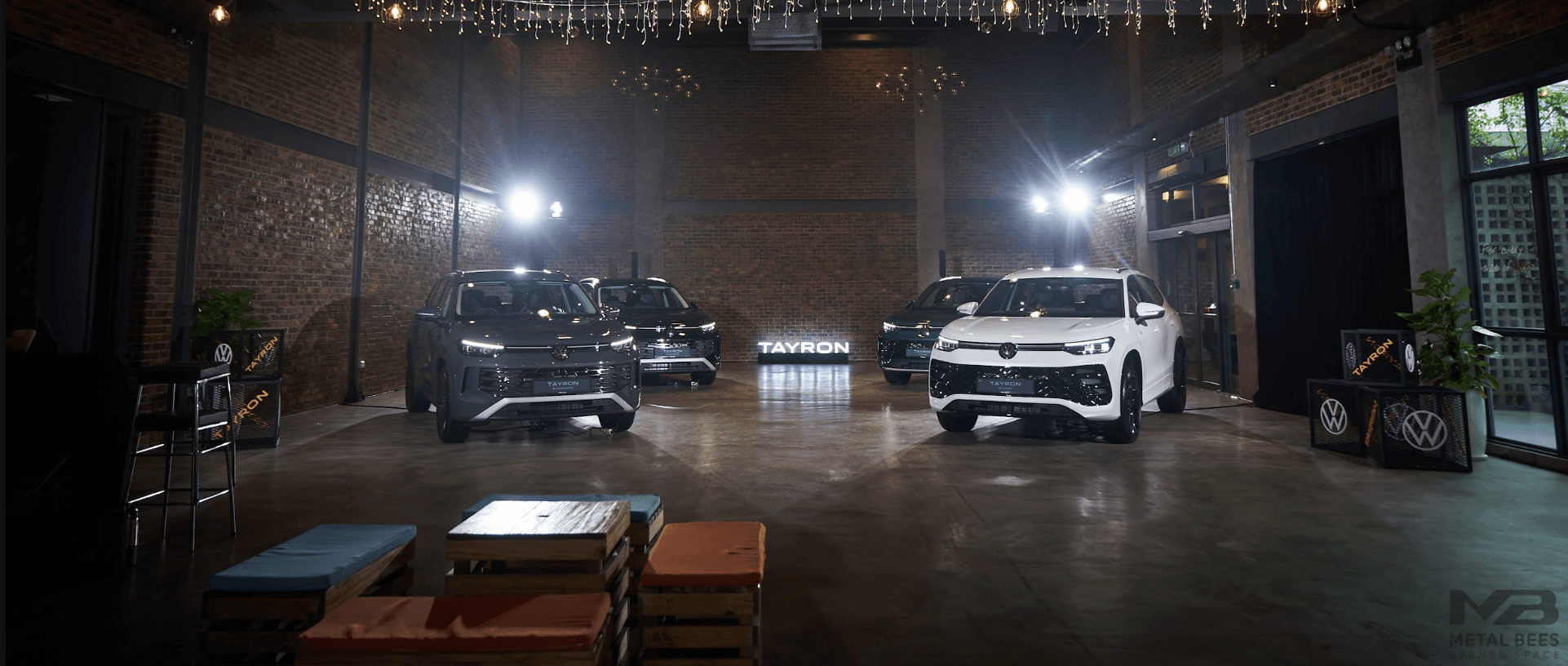
A car launch has one problem most corporate events don’t: you need to get the car into the room. And once it’s there, you need enough space for guests, cameras, lighting and the launch setup built around it. A hotel ballroom rarely solves either problem well.
Why a Hotel Ballroom Usually Isn’t the Answer
Hotel function rooms are built for seated dinners and conferences, not for driving vehicles through. Getting even one car inside usually means a freight lift, a loading corridor, and a facilities team booked weeks in advance. Many hotels limit how many vehicles they’ll allow in at all. Industrial event studios are generally better equipped for this, because they weren’t built around banquet seating to begin with: wide door openings, open floor plans, and a hall shaped around vehicle movement rather than round tables.
What to Look for in a Venue for a Vehicle Launch
- Can the car actually drive into the hall, or does it need a lift or a squeeze through a side door?
- Are there columns that will get in the way of the display or the camera angles?
- Is there enough floor space for every vehicle plus room for guests to walk around them?
- Can the hall go fully dark for the reveal?
- What AV and lighting is already built in, versus what you’ll need to bring in yourself?
- Where will media check-in, backdrops and interviews go — ideally away from the main display?
The Venue Is Part of the Reveal
A car launch isn’t just about getting the vehicles into the building. The venue becomes part of how the car is presented. Ceiling height, lighting control, sightlines and the distance between the audience and the vehicle all affect how the reveal looks in person — and how it comes across in photos and video.
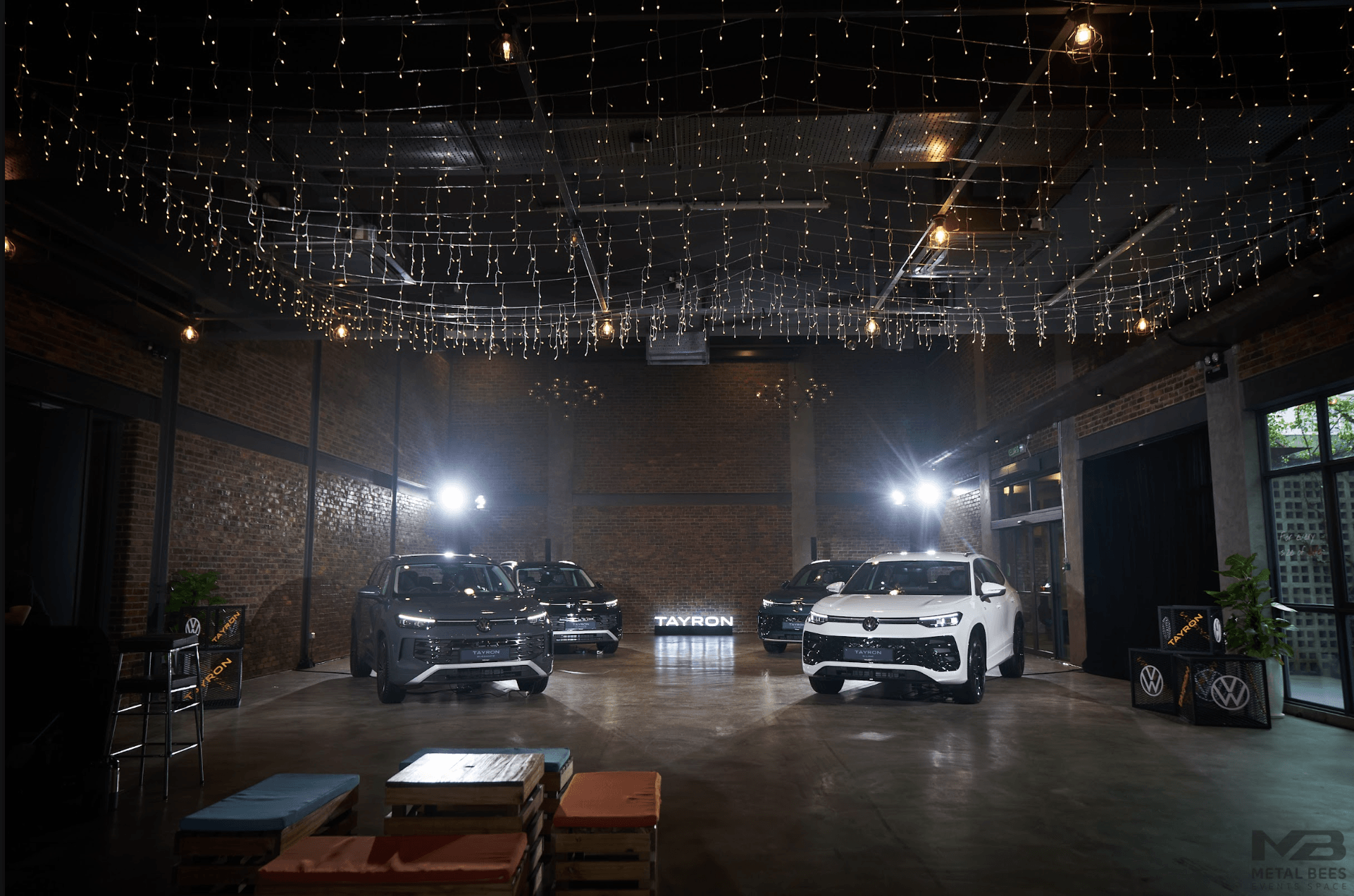
At Metal Bees, the industrial-style halls are built with this in mind: high ceilings for lighting rigs and reveal moments, full blackout capability, and open sightlines that let guests and cameras see the vehicle from multiple angles at once. It’s the difference between a venue that can technically fit the cars, and one that’s actually built around how a launch is meant to look.
The Logistics That Can Make or Break the Launch
Getting the Cars In
Confirm the loading access before booking the venue. If the cars can’t get onto the floor, the rest of the floor plan doesn’t matter. Ask for the exact door width and floor clearance too — not just whether drive-in access exists, but whether it fits your specific vehicles.
Room for the Cameras, Not Just the Guests
A hall might look spacious when it’s empty. Add photographers, videographers, gimbals, lighting rigs and 200 guests, and the same space can get tight fast. Run through the floor plan with your media team before the event, not when everyone is already on-site.
Sort These Details Out Before Launch Day
- Floor dimensions and drive-in access come first. Everything else like staging, seating, catering. Gets designed around the vehicles, not the other way round.
- Ask whether adjoining halls can be combined. It can be more practical than splitting the vehicle display and reception across separate venues.
- Check what AV and lighting is already built in. Bringing your own production rig can add a lot to the production budget.
- Keep the press zone and guest zone separate from day one. Not worked out on-site once the cars are already parked.
Volkswagen’s Tayron media launch at Metal Bees used exactly this approach by combining two adjoining studios, Brick Studio and Rom 8 Studio, to display six vehicles indoors for more than 200 press and lifestyle guests, using the existing drive-in access instead of a temporary loading setup.
Reference:
Malaysian Automotive Association (MAA) 2025 Total Industry Volume figures, as reported by paultan.org (https://paultan.org/2026/01/20/2025-malaysia-new-car-sales-tiv-hit-record-820752-units-dec-and-q4-also-highest-ever-month-quarter/).